Employee health risk assessment: turn HRA insights into a care plan
Understand what an HRA can and cannot tell you, protect employee information and use risk-screening insights to plan appropriate human-led follow-up.
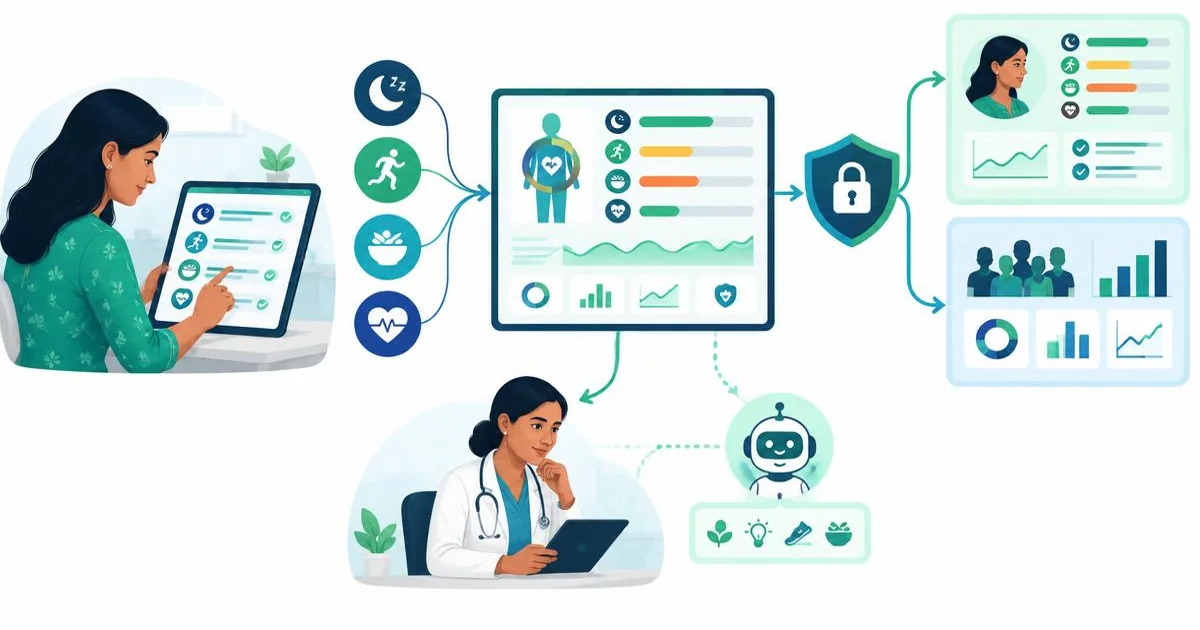
An employee health risk assessment, or HRA, can organise information about lifestyle, health history and relevant measurements to help plan next steps. Its usefulness depends on what happens afterwards. A score without explanation or access to support can leave an employee worried and an employer unsure what action to take.
Know the boundary between screening and diagnosis
An HRA is a screening and planning tool, not a diagnosis, medical clearance or prediction that someone will develop a disease. Questionnaire responses can be incomplete, and measurements may need checking. A low-risk result does not rule out illness; concerning symptoms still need appropriate medical assessment.
Explain what information is used, how results are interpreted and the limitations of the assessment. Personal decisions about tests, treatment or medicines should remain with a qualified clinician who can consider the full context.
Prepare employees before collecting information
Explain the purpose, who can access answers, how results are stored and where employees can ask questions. Collect only information needed for the agreed purpose. Do not assume participation gives an employer permission to use health information for unrelated employment decisions.
Where a programme requires a linked employee account, confirm that access before inviting someone to complete the questionnaire. Avoid promising anonymous saved reports if the actual assessment requires sign-in and an eligible employee record.
Translate findings into practical next steps
- Explain the result in understandable language, including uncertainty and limitations.
- Offer a clinician discussion for concerns that need personal interpretation.
- Match follow-up to individual needs rather than sending every employee the same package.
- Set an appropriate review plan with the clinician; do not invent a universal retest interval.
A general nutrition session or movement activity can support awareness, but it should not replace personal advice when a concern needs evaluation. Agree how urgent findings are handled through the clinical pathway rather than relying on dashboard notifications alone.
Give HR a useful view without exposing individuals
Programme-level participation and carefully aggregated trends can support planning. Named diagnoses and detailed reports should not circulate as general management information. Small teams and detailed cross-filters can reveal identities even without names; decide reporting boundaries before data collection.
Changes in scores may reflect different participants, updated answers or measurement variation. Do not describe a dashboard trend as proof that a wellness programme caused a clinical improvement without suitable evidence.
Let AI explain options, not make medical decisions
An AI assistant can help explain general HRA concepts and prepare questions for a professional. It should not diagnose, prescribe or determine fitness for employment. Do not upload identifiable reports into a public assistant.
Explore Plan My Health at corporatehealth.in, read about employee health risk assessment and discuss a workforce programme. For site operations and service readiness, use the separate workplace audit, not an individual HRA score.
General screening and privacy-planning guidance. Medical review is pending; personal clinical decisions require a qualified professional.
Share this article
Pick a tagline
The highlighted image above appears automatically as the preview picture on WhatsApp, LinkedIn and Facebook.
Related services
Want this for your workforce?
Start free with 25 employee health risk assessments and a corporate dashboard.
Get started for corporatesPlan this for your workplace
Discuss employee health risk assessment (HRA) in India for your employee roles, locations and shift coverage.