
Employee Health Statistics in India: What the Public Data Says
Last updated 11 October 2026
Public surveys show a high burden of diabetes, high blood pressure, obesity, anaemia, tobacco use and mental health conditions among working-age Indians. Here are the key figures from linkable sources, and what they mean for employers.
By the Plan My Health corporate health team
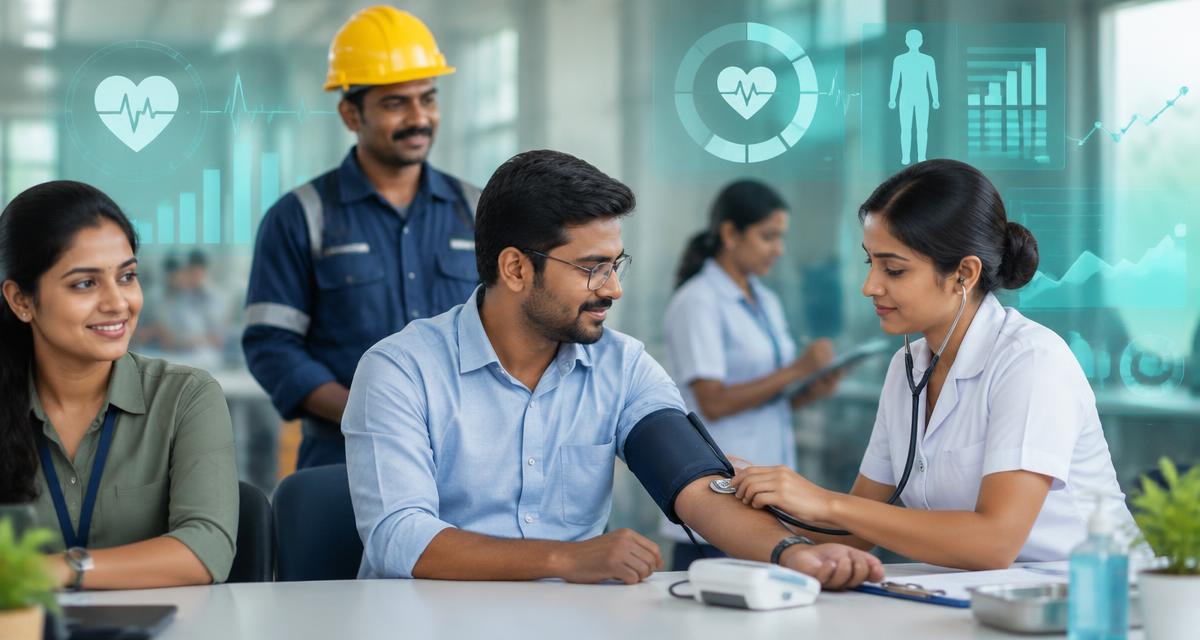
Public data shows that working-age Indians carry a heavy load of largely preventable health risk. The ICMR-INDIAB national study estimated that about 11.4% of Indian adults have diabetes, about 15.3% have prediabetes and about 35.5% have high blood pressure. NFHS-5 found anaemia in 57.0% of women and 25.0% of men aged 15–49, and tobacco use among 38.0% of men and 8.9% of women aged 15 and over. For employers, the implication is simple: a large share of any Indian workforce has risk that is silent today and expensive later, and most of it can be found early and reduced.
Every figure below links to its public source. We have left out numbers we could not verify. National averages describe India as a whole, not your company; your own employee health risk assessment and checkup data are the only reliable picture of your workforce. For what to do with the numbers, read our guide to employee health in India.
Diabetes and prediabetes
The ICMR-INDIAB study, published in The Lancet Diabetes & Endocrinology in 2023, surveyed adults across all states and union territories. It estimated the prevalence of diabetes among Indian adults at about 11.4% and prediabetes at about 15.3%. ([Source: ICMR-INDIAB, The Lancet Diabetes & Endocrinology, 2023](https://www.thelancet.com/journals/landia/article/PIIS2213-8587(23)00119-5/fulltext))
What it means at work: in a team of 100 adults, the national averages suggest roughly a quarter may have either diabetes or prediabetes, many without knowing it. Prediabetes is the stage where lifestyle change works best, which is why fasting sugar and HbA1c belong in most corporate checkups and why an HRA that flags risk early is valuable.
High blood pressure
The same study estimated the prevalence of hypertension among Indian adults at about 35.5%. ([Source: ICMR-INDIAB, 2023](https://www.thelancet.com/journals/landia/article/PIIS2213-8587(23)00119-5/fulltext))
What it means at work: high blood pressure rarely causes symptoms until it causes a heart attack or stroke. A simple BP check at every checkup camp and in the onsite clinic, with follow-up of high readings, is one of the cheapest and most effective things an employer can do. Shift workers and employees under sustained stress deserve particular attention.
Obesity and abdominal obesity
ICMR-INDIAB estimated generalised obesity at about 28.6% and abdominal obesity at about 39.5% of Indian adults. ([Source: ICMR-INDIAB, 2023](https://www.thelancet.com/journals/landia/article/PIIS2213-8587(23)00119-5/fulltext))
What it means at work: South Asians develop metabolic disease at lower body weights than Western populations, which is why Asian-Indian BMI cut-offs are lower. Our HRA treats a BMI below 23 as optimal and 23 to under 25 as moderate risk; see why Indian BMI cut-offs matter. Waist measurement adds useful information because abdominal fat carries extra risk.
Anaemia
NFHS-5 (2019–21) found that 57.0% of women aged 15–49 and 25.0% of men aged 15–49 were anaemic. ([Source: National Family Health Survey, NFHS-5](https://rchiips.org/nfhs/factsheet_NFHS-5.shtml))
What it means at work: anaemia causes tiredness, breathlessness and poor concentration, and it is common among women employees and among workers with poor diets. A blood count in the annual checkup, nutrition sessions and targeted follow-up can make a visible difference to energy and wellbeing. Women's health sessions are a natural place to address it.
Tobacco use
NFHS-5 reported tobacco use by 38.0% of men and 8.9% of women aged 15 and over. ([Source: NFHS-5](https://rchiips.org/nfhs/factsheet_NFHS-5.shtml)) The Global Adult Tobacco Survey (GATS-2, 2016–17) found that 28.6% of adults in India used tobacco in some form, including smokeless tobacco. ([Source: GATS-2 India](https://ntcp.mohfw.gov.in/assets/document/surveys-reports-publications/Global-Adult-Tobacco-Survey-Second-Round-India-2016-2017.pdf))
What it means at work: smokeless tobacco is widely used among factory, construction and transport workers and is easy to overlook in office-designed programmes. Quit support in the workers' language, oral screening at camps and follow-up consultations are more effective than posters alone.
Mental health
The National Mental Health Survey of India (2015–16), conducted by NIMHANS, estimated the current prevalence of mental morbidity among adults at about 10.6%, and reported a large gap between those who need care and those who receive it. ([Source: National Mental Health Survey, NIMHANS](https://indianmhs.nimhans.ac.in/))
What it means at work: in most teams, someone is living with anxiety, depression, substance use or severe stress. Confidential screening in the HRA, stress management workshops, manager training and access to counselling help, provided privacy is protected. Our article on employee mental health screening explains how to screen safely.
Work-related disease and injury
The WHO and ILO's first joint estimates of the work-related burden of disease and injury, published in 2021, attributed about 1.9 million deaths worldwide in 2016 to work-related causes, with exposure to long working hours, air pollution at work and occupational injuries among the leading risk factors. ([Source: WHO/ILO, 2021](https://www.who.int/news/item/17-09-2021-who-ilo-almost-2-million-people-die-from-work-related-causes-each-year)) The WHO's fact sheet on protecting workers' health describes the main occupational hazards and the role of occupational health services. ([Source: WHO](https://www.who.int/news-room/fact-sheets/detail/protecting-workers'-health))
What it means at work: these are global figures, not India-specific ones, but Indian factories, construction sites and transport operations share the same exposures. Noise, dust, chemicals, heat and long hours are where statutory examinations and an occupational health centre matter most.
Where to find Indian workforce data
The Labour Bureau of the Ministry of Labour & Employment publishes labour statistics and reports on employment and working conditions. ([Source: Labour Bureau](https://labourbureau.gov.in/)) The Directorate General Factory Advice Service & Labour Institutes (DGFASLI) and state factory inspectorates publish information on factory safety. We have not quoted injury or illness figures from these sources here because we could not confirm a current, linkable national figure; check the latest reports directly.
Summary table
| Indicator | Figure | Source |
|---|---|---|
| Diabetes, adults | about 11.4% | ICMR-INDIAB 2023 |
| Prediabetes, adults | about 15.3% | ICMR-INDIAB 2023 |
| Hypertension, adults | about 35.5% | ICMR-INDIAB 2023 |
| Generalised obesity, adults | about 28.6% | ICMR-INDIAB 2023 |
| Abdominal obesity, adults | about 39.5% | ICMR-INDIAB 2023 |
| Anaemia, women 15–49 | 57.0% | NFHS-5 |
| Anaemia, men 15–49 | 25.0% | NFHS-5 |
| Tobacco use, men 15+ | 38.0% | NFHS-5 |
| Tobacco use, women 15+ | 8.9% | NFHS-5 |
| Tobacco use, adults (any form) | 28.6% | GATS-2 2016–17 |
| Current mental morbidity, adults | about 10.6% | NMHS 2015–16 |
What employers should do with these numbers
- Measure your own workforce with an HRA and checkups instead of relying on national averages.
- Include the tests that match the big national risks: sugar and HbA1c, lipids, BP, blood count and BMI on Indian cut-offs.
- Design for every workforce, including factory, site and field staff, and address tobacco and heat where they matter.
- Take mental health seriously, with confidential screening and real access to help.
- Follow up abnormal results — finding risk is only useful if someone acts on it.
- Repeat measurement each year and track movement between risk bands.
How Plan My Health helps
Our HRA, corporate health checkup in India, onsite clinics, OHCs and corporate wellness programmes in India are built around the risks above. Start with the free HRA for your first 25 employees, or read the complete guide to employee health in India.
FAQs
How common is diabetes among Indian adults?
The ICMR-INDIAB study (2023) estimated about 11.4% of Indian adults have diabetes and about 15.3% have prediabetes.
How common is high blood pressure in India?
ICMR-INDIAB estimated about 35.5% of Indian adults have hypertension.
How common is anaemia among Indian workers?
NFHS-5 found anaemia in 57.0% of women and 25.0% of men aged 15–49.
Are these figures specific to employees?
No. They are national adult figures. Your own HRA and checkup data are the reliable picture of your workforce.
Why are some figures missing?
We only include figures we can link to a public source. Where we could not verify a current national figure, we left it out.
Share this article
Pick a tagline
The highlighted image above appears automatically as the preview picture on WhatsApp, LinkedIn and Facebook.
Related services
Want this for your workforce?
Start free with 25 employee health risk assessments and a corporate dashboard.
Get started for corporates