
Employee Mental Health Screening at Work: PHQ-9, GAD-7 and Next Steps
Last updated 29 September 2026
Why screen, how PHQ-9 and GAD-7 work, confidentiality boundaries, the counsellor pathway, and how to report to leadership without ever naming names.
By the Plan My Health corporate health team
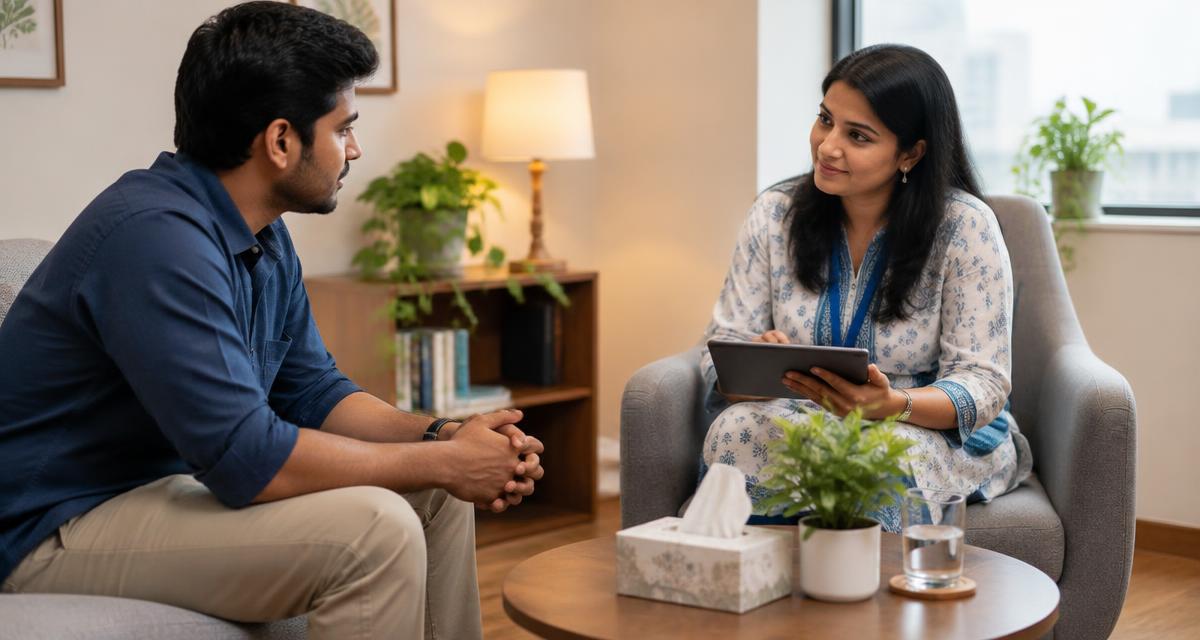
Mental health is the part of employee wellbeing most Indian companies talk about and least companies measure. The hesitation is understandable — mental health data feels more sensitive than cholesterol — but the tools for doing this responsibly are well established. Two short questionnaires, PHQ-9 and GAD-7, are the global standard for screening depression and anxiety, and they fit naturally into an employee health risk assessment. Here is how to run screening at work without turning it into a trust problem.
Why screen at all
Depression and anxiety are among the most common health conditions in any working population, and they are invisible in checkup reports — no lipid panel catches them. Left unaddressed they show up where HR does see them: absence, presenteeism, attrition, irritability in teams, and eventually physical complaints. Screening matters because most people who would benefit from support never ask for it on their own — not because they don't want help, but because nobody made asking easy and safe. A well-run programme surfaces the need early, when a conversation and a few counselling sessions are enough.
What PHQ-9 and GAD-7 actually are
PHQ-9 is nine questions on depressive symptoms over the past two weeks; GAD-7 is seven on anxiety. Both take a couple of minutes, are validated in multiple Indian languages, and score severity in bands — minimal, mild, moderate, moderately severe, severe. In our HRA they sit alongside lifestyle, sleep and stress questions so the risk score reflects mental wellbeing, not just metabolic health. The output at company level is a distribution: what share of employees screen mild, moderate or above — anonymised, never individual. You can see how this fits into the health risk assessment we run free for your first 25 employees.
The confidentiality line — draw it before you start
Get this wrong once and participation never recovers. The rules we operate by:
- Individual answers and scores are visible to the employee and the clinical team only — never to HR, managers or anyone in the reporting line.
- HR and leadership see aggregate distributions and programme-level trends, with no cuts fine enough to identify a person.
- Screening is consent-based and explained plainly: what is asked, who sees what, and what happens next.
- Records are stored in India, encrypted, with access logs, consistent with the DPDP Act, 2023.
- A high score triggers a supportive outreach from a counsellor — not an HR email, and never a manager conversation.
The pathway after a concerning score
Screening without a response pathway is worse than not screening, because it asks people to disclose and delivers nothing. The loop we run: any employee screening moderate or above is offered a confidential counselling session, at company cost, bookable from the same screen — no gatekeeping, no manager approval. The counsellor assesses and, where needed, refers to a psychiatrist or clinical psychologist. A re-screen after the suggested period confirms whether things improved. The metric HR tracks is the one that matters: time from an abnormal screen to the first counselling session. Our wellness sessions and counselling access plug into the same pathway, so awareness months and counselling are one system rather than separate vendors.
Reporting to leadership without names
Leadership needs numbers; employees need safety. The quarterly report that satisfies both shows: screening participation rate, the severity distribution, average time to first counselling contact, utilisation of counselling sessions, and trend movement since the last quarter — all aggregate. Add narrative context ("moderate-or-above anxiety scores cluster in the operations team aged 30–40; night-shift rotation is a plausible factor") without crossing into identifiability. This is the same principle that governs the rest of the platform: HR sees the risk map, never the medical record.
Start small and normalise
The first year is about normalising: introduce screening inside the annual HRA, have leadership say plainly why it exists, fund the counselling pathway, and report the aggregates. In our experience participation follows credibility — employees complete the questions when they believe the answers stay private and a high score produces help rather than scrutiny. Enrol your company free and we will set up screening, the counsellor pathway and the leadership reporting pack for your workforce.
Protecting privacy and building trust
Employees will only answer screening questionnaires honestly if they trust that their answers stay private. Say clearly, before anyone starts, who can see individual results — usually only the employee and the counsellor or doctor — and that HR sees only aggregated, anonymised numbers. Collect consent in plain language, and never link screening results to performance reviews or promotion decisions.
Make the route from screening to help short. An employee whose score suggests moderate or severe depression or anxiety should be offered a counsellor appointment within days, with a choice of phone, video or in-person sessions and of language. If a response indicates risk of self-harm, the process must trigger an immediate call from a qualified professional and share emergency helpline numbers straight away.
Managers need support too. Short training on noticing warning signs, starting a supportive conversation and pointing colleagues to the counselling service does more than posters on a notice board. Review the programme every quarter using anonymised measures such as screening participation, time to first counselling session and follow-up completion.
- Explain who sees what, and keep individual results private.
- Offer counselling within days, with urgent escalation for risk.
- Train managers and review anonymised measures every quarter.
Plan My Health delivers corporate wellness programs, stress management workshop and employee wellness calendar for companies across India — talk to our corporate health team for a proposal matched to your workforce.
Share this article
Pick a tagline
The highlighted image above appears automatically as the preview picture on WhatsApp, LinkedIn and Facebook.
Related services
Want this for your workforce?
Start free with 25 employee health risk assessments and a corporate dashboard.
Get started for corporates