
Factory ambulance
Ambulance for Factories with Driver and EMT
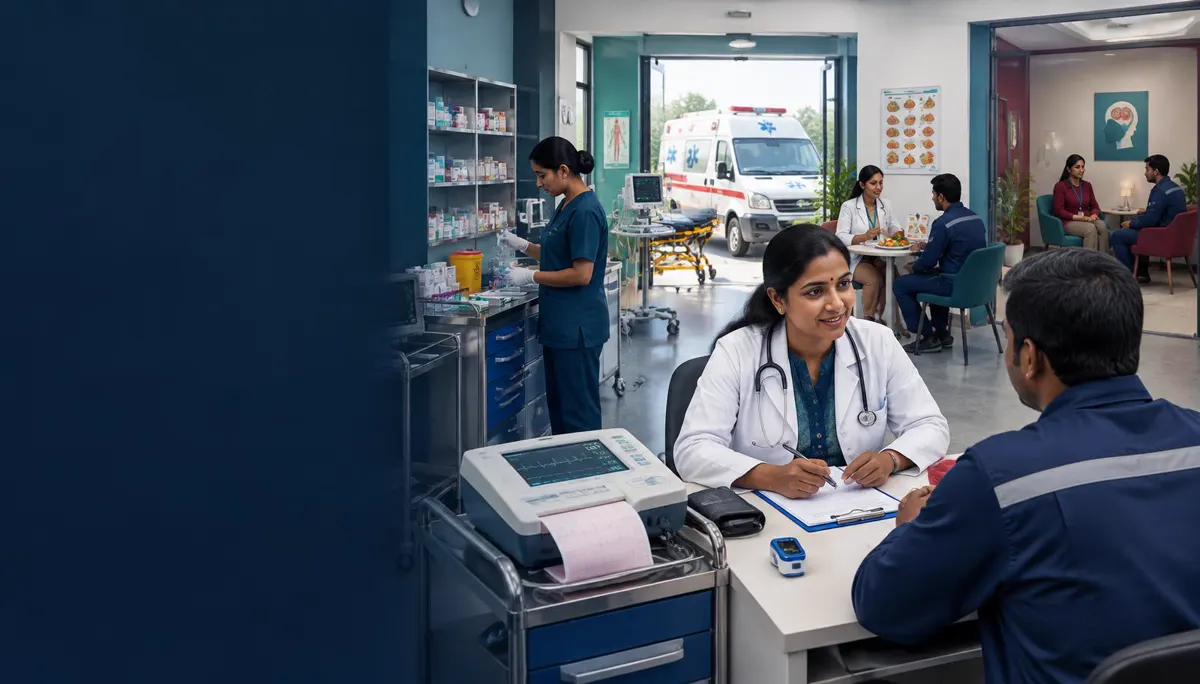
An ambulance for a factory is a BLS or ALS vehicle stationed at the plant by shift, crewed by a driver and EMT and linked to the ambulance room, so that injured or collapsed workers reach hospital quickly and in a stable condition. Continuous-process and hazardous plants usually keep one on site round the clock.
The vehicle is only half the service — the other half is knowing which hospital takes which case and how long it takes to get there from your gate.
About 10 years in corporate health · PAN-India delivery · Trusted by teams at






By site type
- Ambulance for construction sites
- Ambulance for factories
- Ambulance for corporate offices
Choosing BLS or ALS for your plant
A BLS ambulance suits most plants close to hospitals. An ALS ambulance — with cardiac monitor, defibrillator, advanced airway and emergency drugs — is recommended for chemical and petrochemical units, foundries, plants far from a trauma centre and sites with large headcounts.
Hazard-specific preparation
- Chemical exposure: decontamination steps, eye irrigation and the plant's material safety data sheets on board
- Burns: burn dressings and cooling protocol, with the nearest burns unit identified
- Crush and amputation: tourniquets, splints and a cold-chain plan for amputated parts
- Cardiac events: AED or defibrillator and CPR-trained crew
Factories Act and ambulance requirements
The Factories Act and state rules require an ambulance room above prescribed headcounts, and some states or processes also require an ambulance van or a transport arrangement. Our ambulance can be integrated with your ambulance room and OHC staff.
Legal references on this page are general guidance. Exact requirements depend on your state rules, the work you carry out and your headcount, so we confirm the applicable rules for each site before we propose a scope.
Shift rosters and reporting
Crews are rostered to your shift pattern with relief cover. Every shift begins with a vehicle and equipment checklist; every call is logged with timings. The EHS head receives a monthly report on calls, response times and drill results.
Mutual aid in industrial estates
In MIDC, GIDC and similar estates, neighbouring plants sometimes coordinate emergency resources. We can document how your ambulance fits into any mutual-aid arrangement your estate association operates, without compromising cover at your own gate.
How we scope factory ambulance cover
- Short call with HR, EHS or the project manager to understand headcount, shifts and existing arrangements
- Site or office walk-through (in person or on video) to see the actual layout, access routes and risks
- Written proposal with scope, staffing, schedule and price — nothing bundled that you did not ask for
- Mobilisation, induction into your site rules and a named coordinator for the account
- Monthly review with digital records in the Plan My Health platform
Frequently asked questions
Is a patient transport vehicle enough?
For non-emergency transfers, yes. For injuries and collapses you need an equipped ambulance with a trained crew.
Can the ambulance crew help in the OHC?
Yes. EMTs can support the nurse between calls, within their training.
Do you cover all three shifts?
Yes, with relief crew for leave and weekly offs.
How do you choose referral hospitals?
We list the nearest hospitals by type of emergency and confirm the route and timing; we do not claim formal tie-ups unless you have them.
Can the ambulance be shared with a sister plant?
Only if the response time to both remains safe.
Related services
Guides for HR and EHS teams
Cities we serve
Get a quote in 24 hours
Share your headcount and locations — we reply within one working day with a scope and quote.