
Standby Ambulance for Office, Factory or Construction Site: BLS vs ALS and How to Hire
Last updated 11 October 2026
Hiring an ambulance for your office, factory, construction site or event? Compare BLS vs ALS, on-site vs on-call, staffing, response time and contract terms.
By the Plan My Health corporate health team
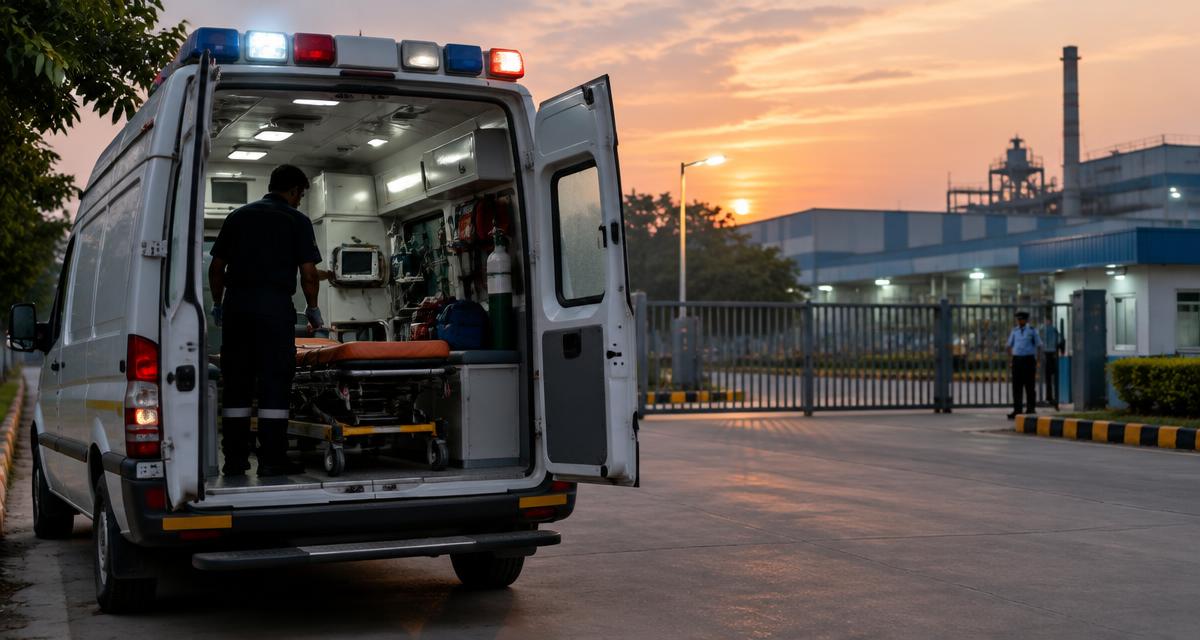
A standby ambulance is an ambulance retained for your workplace — parked on site or committed to reach you within a fixed time — so an injured or collapsed employee reaches hospital within the golden hour. The two choices that matter most are the ambulance type (BLS or ALS) and the model (on-site retained or on-call).
Why a public helpline alone is not enough
Public emergency numbers like 108 are vital, but response times vary with distance, traffic and demand. A plant outside city limits, a high-rise office in a congested business district or a construction site on the edge of town can wait far longer than the minutes a cardiac arrest or major bleed allows. A retained ambulance removes that uncertainty.
BLS vs ALS: which one do you need?
| BLS (Basic Life Support) | ALS (Advanced Life Support) | |
|---|---|---|
| Crew | Driver + trained EMT / paramedic | Driver + paramedic, often with a nurse or doctor |
| Equipment | Oxygen, stretcher, spine board, suction, first aid, AED | All BLS equipment plus cardiac monitor, defibrillator, ventilator, IV drugs |
| Best for | Injuries, fainting, fractures, transfers | Cardiac events, severe trauma, high-risk plants, large events |
Many workplaces start with a BLS ambulance plus an AED and trained first-aiders, then move to ALS for high-risk processes or large headcounts.
On-site retained vs on-call
- On-site retained: the ambulance and crew stay at your premises during working hours or 24x7. Fastest response; suits factories, large construction sites and campuses.
- On-call with guaranteed response: the provider commits to reach you within an agreed time. Lower cost; suits offices and smaller sites close to hospitals.
- Event standby: an ambulance and crew for a town hall, sports day, offsite or plant inauguration.
What to put in the contract
- Ambulance type, equipment list and registration details.
- Crew qualifications and a back-up crew for leave days.
- Hours of cover and response time (for on-call).
- Named receiving hospitals for trauma, cardiac and burns cases.
- Fuel, kilometre limits and charges beyond the limit.
- Monthly equipment and oxygen checks, with a signed checklist.
- Trip log and incident report shared with HR or EHS within 24 hours.
- Penalty or replacement clause if the ambulance is unavailable.
Office, factory and construction site needs
- Corporate offices: an on-call ALS arrangement plus an AED on every floor and BLS-trained floor wardens covers most risks. Large campuses often retain a BLS ambulance during working hours.
- Factories: on-site retained ambulance matched to shift timings; crew familiar with chemical exposure, burns and crush injuries; tie-up with a trauma centre.
- Construction sites: an ambulance that can reach the work area over rough ground, a stretcher route from upper floors, and a hospital map displayed on site.
Make the ambulance part of a wider emergency plan
An ambulance only works if people know how to call it and what to do until it arrives. Pair it with first aid training, an emergency call tree displayed on every floor, and quarterly drills that time the response from call to hospital door.
How Plan My Health helps
Plan My Health arranges BLS and ALS ambulances for offices, factories, construction sites and events, as on-site retained or on-call cover, alongside onsite nurses and first aid training. See ambulance for offices, factories and construction sites and ambulance for corporate offices.
FAQs
Is an ambulance mandatory for factories in India?
The Factories Act requires an ambulance room in factories employing more than 500 workers, and every factory must have arrangements to move injured workers. Many plants retain an ambulance to meet this duty in practice.
What is the difference between an ambulance room and an ambulance?
An ambulance room is an on-site medical room with a qualified medical practitioner and nursing staff. An ambulance is the vehicle used to transfer patients to hospital.
Do offices need an ALS ambulance?
Not usually on site. An on-call ALS arrangement, AEDs and trained first-aiders cover most office emergencies; large campuses may retain a BLS ambulance.
Can we hire an ambulance only for an event?
Yes. Event standby ambulances are booked for the event hours with a crew and equipment matched to the crowd size and activities.
How do we test whether our ambulance arrangement works?
Run a drill: raise a mock emergency, time each step from the first call to the patient reaching the hospital, and fix the slowest step.
Share this article
Pick a tagline
The highlighted image above appears automatically as the preview picture on WhatsApp, LinkedIn and Facebook.
Related services
Want this for your workforce?
Start free with 25 employee health risk assessments and a corporate dashboard.
Get started for corporates