
Corporate yoga across India
Yoga Sessions for Office & Corporate Yoga in India
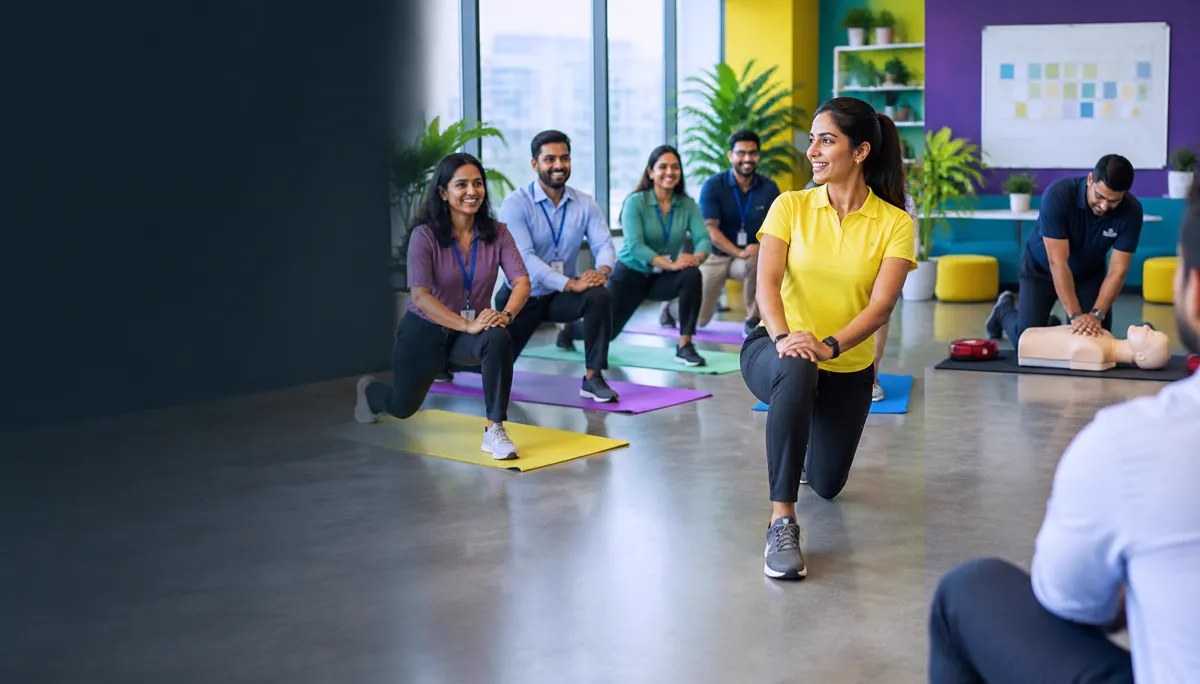
Corporate yoga sessions bring short, guided yoga, stretching and breathing practice to the workplace — at the desk, in a meeting room, on the plant floor or online — so employees can ease stiffness, take a mental break and build a habit of movement during the working day. Plan My Health runs corporate yoga across India, onsite and online, led by certified yoga instructors.
This page covers desk and chair yoga, breathing sessions, onsite versus online delivery, International Yoga Day programmes on 21 June, safety screening and versions for factories and shift teams. Yoga supports wellbeing; it is not a treatment or cure for any medical condition.
About 10 years in corporate health · PAN-India delivery · Trusted by teams at










Available across India, by state
Maharashtra
Delhi, Haryana and Uttar Pradesh
Karnataka
Tamil Nadu
Telangana
Onsite
At your office, plant or site
Online
Live video with joining links
Hybrid
One session, every location
Why yoga suits the workplace
Most office employees sit for long hours, and many factory roles involve repetitive movement or standing. Yoga needs no equipment, can be adapted to any fitness level and can be done in work clothes. A short session gives the body a break from one posture and the mind a break from the screen. Because it combines movement with breathing, it is one of the easiest ways to introduce both physical activity and a calming practice in a single session.
Desk yoga
Desk yoga is a 10 to 15-minute sequence done standing beside or sitting at the workstation: neck and shoulder releases, wrist and finger stretches for keyboard users, gentle spinal twists, side stretches and eye relaxation. It is ideal as a mid-morning or post-lunch break and can be delivered team by team or over a video call. Our desk yoga routine for office employees describes a sample sequence with safety notes.
A sample corporate yoga programme
- Week 1: onsite launch session — introduction, safety questionnaire and a 20-minute practice
- Weeks 2–8: one weekly 30 to 45-minute class, onsite or online, at the same time each week
- Daily: a 10-minute desk-yoga break led by a team volunteer or a recorded routine
- Mid-programme: a posture and back-care session with a physiotherapist
- End: feedback pulse, a celebration session and a plan for the next cycle
Yoga for different groups of employees
Senior employees and those new to exercise do well with chair yoga and gentle breathing. Younger teams often enjoy a more active flow in a weekly class. Women employees may prefer women-only sessions, and pregnant employees should practise only with their doctor's approval and an instructor's modifications. Employees with long screen hours benefit most from neck, shoulder, wrist and eye routines. Instructors adapt every session to the group in the room.
Practical set-up for onsite sessions
- A clear, ventilated space such as a training room, cafeteria after lunch or terrace in mild weather
- Mats for floor-based classes, or chairs for chair yoga
- A time slot protected from meetings — early morning or just before lunch works well
- Drinking water and a place to leave shoes
- A short reminder message the day before with what to wear
Breathing practice before high-pressure moments
Short breathing routines are among the most practical things employees take from yoga. A two-minute slow-breathing practice before a presentation, after a difficult call or at the end of a night shift is easy to remember and needs no space. We teach a small set of safe techniques and avoid forceful or breath-holding practices in general groups.
Yoga within a wider wellness and fitness plan
Yoga combines well with other parts of an employee wellness programme: stress management workshops for mental wellbeing, ergonomics sessions for posture, and step or water challenges on our platform as part of a corporate fitness program. A yearly health risk assessment shows whether activity and sitting-time answers are improving.
Planning a year of office yoga
A single yoga session is pleasant; a year of short, regular sessions changes habits. Many companies start with a weekly 30-minute online session open to every location, add onsite sessions at the main office once a month and build up to an International Yoga Day programme on 21 June. Chair and desk yoga sessions run in meeting rooms without changing clothes, so they fit into the working day. For factory teams, short stretching and breathing routines are done at shift start.
Before any session, participants complete a short safety screen. People with recent surgery, uncontrolled blood pressure, pregnancy, back or joint problems are offered modified poses or advised to check with their doctor. Yoga sessions are offered for wellbeing and flexibility; we do not claim that yoga cures any medical condition.
Chair yoga
Chair yoga adapts traditional postures so they can be done seated, which makes it accessible to employees who are older, less flexible, recovering from minor injuries (with their doctor's agreement) or simply uncomfortable on a mat in the office. Sessions include seated cat-cow, forward bends, hip openers, ankle work and breathing, and are popular in conference rooms where floor space is limited.
Breathing and relaxation sessions
Breathing sessions teach simple, safe techniques — slow abdominal breathing, extended exhalation, alternate nostril breathing — that employees can use before a presentation, after a difficult call or to wind down before sleep. They combine well with stress management workshops and mindfulness sessions. Strong or forceful breathing practices are avoided in general workplace groups.
Session formats
- One-off workshop of 45 to 60 minutes — introduction, practice and a routine to take home
- Weekly or twice-weekly classes over a month or a quarter to build a habit
- 10 to 15-minute desk or chair yoga breaks delivered team by team
- Morning online classes before work for hybrid and remote teams
- Yoga Day programmes in the week around 21 June
- Combined sessions with an ergonomics or back-care talk led by a physiotherapist
Onsite versus online yoga for employees
Onsite sessions are better for correcting posture, for beginners and for building a team feeling; they need a clear space such as a training room, cafeteria or terrace and, for mat sessions, mats arranged in advance. Online sessions reach every location at once, suit early-morning slots and let employees practise at home with family. Many companies combine both — an onsite launch and Yoga Day event, with online classes the rest of the year.
International Yoga Day (21 June) corporate programmes
International Yoga Day is the natural anchor for a corporate yoga calendar. Popular formats include a common morning session across all locations, a week of short daily desk-yoga breaks, a family online session at the weekend and a talk on posture or sleep alongside the practice. Planning should start in May so instructors, spaces and timings are confirmed for every site, including plants and shift teams.
Safety screening before sessions
Before a programme starts, participants are asked a short set of health questions and reminded to tell the instructor about pregnancy, recent surgery, back or joint problems, high blood pressure, heart conditions, dizziness or any condition their doctor has advised caution on. Instructors offer modifications or seated alternatives, avoid inversions and strong forward bends in mixed groups, and ask anyone with pain or breathlessness to stop. Employees with medical conditions are advised to check with their doctor first.
Yoga for factories and shift teams
On factory floors and in warehouses, yoga becomes a 10 to 15-minute standing routine at shift start: gentle warm-up, back and shoulder mobility for lifting and repetitive work, leg stretches for standing roles and a short breathing practice. It is delivered in the language workers use, in work clothes and without mats. Night-shift teams get their own session so they are not left out.
Yoga on construction sites
On construction sites, short standing stretch-and-breathe routines can be added to the morning toolbox talk, with extra care in hot weather and plenty of water. Sessions avoid anything that strains workers already doing heavy manual labour; the focus is mobility and recovery rather than exertion.
Who leads the sessions
Sessions are led by certified yoga instructors experienced with mixed workplace groups. For back, neck and posture-focused programmes, a physiotherapist can add a short ergonomics segment so employees connect what they practise with how they sit and work.
Measuring participation and benefit
- Attendance by location, team and shift across the programme
- Repeat attendance — the best sign a habit is forming
- A short feedback pulse on comfort, energy and stress after a few weeks
- Change in activity and sitting-time answers between health risk assessments
- Uptake of related sessions such as ergonomics or stress management
What we avoid
We do not promise that yoga will cure back pain, diabetes, hypertension or any other condition, and instructors do not give medical advice. Yoga is presented as a safe, enjoyable part of a healthy routine. Employees with symptoms are encouraged to see a doctor, and our tele-consultation and checkup services are there for that.
Frequently asked questions
What are corporate yoga sessions?
Guided yoga, stretching and breathing sessions delivered at the workplace or online for employees during or around the working day.
What is desk yoga?
A 10 to 15-minute sequence of stretches and breathing done standing beside or sitting at the workstation.
Do employees need mats or special clothing?
Not for desk or chair yoga. Mat-based sessions need a clear space and mats arranged in advance.
Can yoga sessions be run online?
Yes — morning and lunch-time online classes work well for hybrid and multi-city teams.
Do you run International Yoga Day programmes?
Yes — common sessions across locations, week-long desk-yoga breaks and family sessions around 21 June.
Is yoga safe for everyone?
Most people can do adapted yoga. Participants answer health questions first, and those with medical conditions should check with their doctor.
Can factory workers do yoga at work?
Yes — short standing routines at shift start, in work clothes and in the workers' language.
Will yoga cure back pain or other conditions?
We do not make medical claims. Yoga supports wellbeing; symptoms should be assessed by a doctor.
Who leads the sessions?
Certified yoga instructors, with a physiotherapist for posture-focused programmes where needed.
Will HR see individual employees' health details?
No. Employees see their own results. HR sees anonymised, aggregated data plus any fitness opinion the law requires for specific roles. Anything more is shared only with the employee's consent, in line with the Digital Personal Data Protection Act, 2023.
Related services
Guides for HR and EHS teams
Cities we serve
Get a quote in 24 hours
Share your headcount and locations — we reply within one working day with a scope and quote.