
Stress management across India
Stress Management Workshops for Employees in India
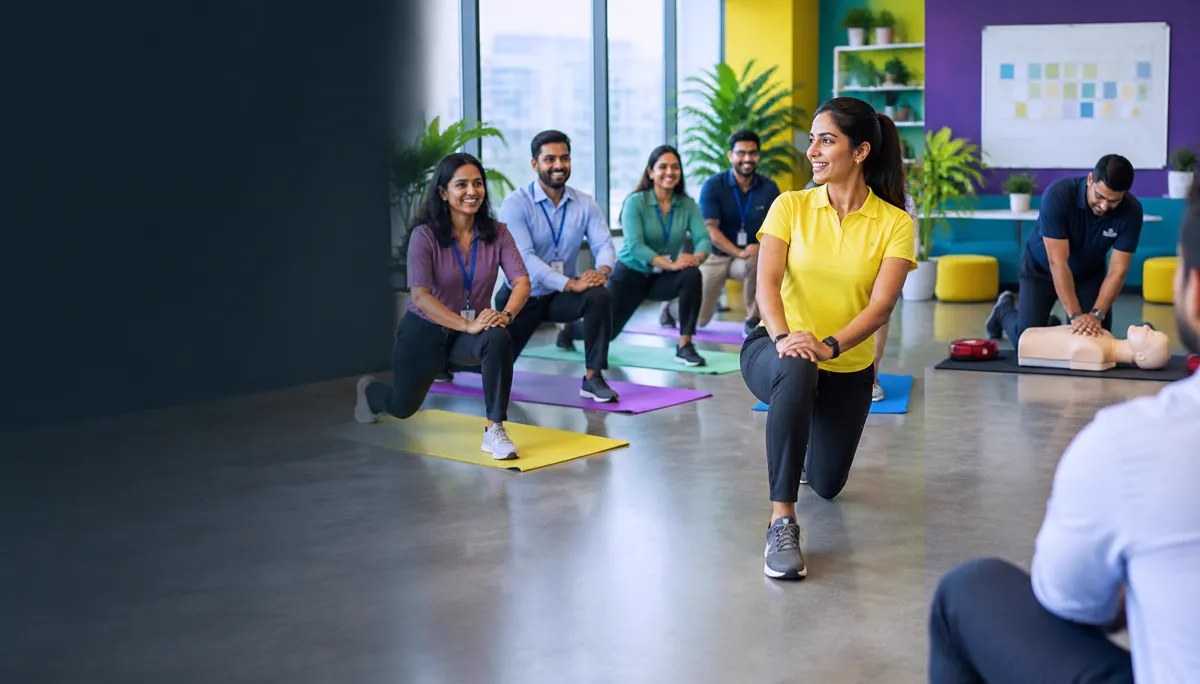
A stress management workshop for employees is a practical, expert-led session that helps people recognise how stress shows up in their body, thoughts and work, and practise simple techniques — breathing, reframing, boundaries, sleep routines — they can use the same day. Plan My Health runs these workshops onsite, online and hybrid for offices, plants and field teams across India, led by psychologists and counsellors.
Below we cover formats, topics, versions for managers, shift workers and sales teams, languages, the support that sits around a workshop and how to measure whether it helped.
About 10 years in corporate health · PAN-India delivery · Trusted by teams at




Available across India, by state
Maharashtra
Delhi, Haryana and Uttar Pradesh
Karnataka
Tamil Nadu
Telangana
Onsite
At your office, plant or site
Online
Live video with joining links
Hybrid
One session, every location
What a stress management workshop is — and is not
A good workshop is skills practice, not a lecture on why stress is bad. Employees leave with two or three techniques they have actually tried in the room and a plan for when to use them. It is also not therapy: the facilitator does not ask anyone to share personal difficulties in front of colleagues, and anyone who needs individual help is pointed, privately, to confidential support.
Workshop formats
- 45 to 60-minute workshop — the most common format, with a short input, two practice exercises and Q&A
- 90-minute deep-dive — for teams going through change, peak season or a difficult period
- 15-minute desk or huddle session — one technique, delivered team by team
- Live webinar — for hybrid and multi-city teams, with breakout practice where the group size allows
- Shift-start session — 15 to 20 minutes on the plant floor, on paid time, for each shift
- Series of three to four sessions — for a team that wants to build the habit over a month
Common causes of workplace stress we address
Workshops acknowledge that some causes sit with the organisation rather than the individual. Anonymised themes raised in sessions are passed back to HR so workload or process issues can be looked at, not just coped with.
- Workload, deadlines and unclear priorities
- Long commutes and rotating shifts that cut into sleep and family time
- Targets, rejection and difficult customers in sales and service roles
- Change: restructuring, new systems, new managers
- Always-on messaging and blurred boundaries in hybrid work
- Personal pressures — finances, caring for parents or children — that spill into work
Techniques employees practise
- Slow breathing with a longer exhale, usable at a desk or on the shop floor
- Grounding exercises to step out of a spiral of worry
- Thought checking: spotting all-or-nothing thinking and trying a balanced alternative
- Task triage: what must be done today, what can wait, what can be handed back
- Micro-breaks and movement — a short stretch or walk between tasks
- A wind-down routine for better sleep, including after night shifts
Stress workshops during difficult periods
Some of the most valuable sessions happen at hard moments: after a restructuring, during a peak season, following a serious incident at a site or when a team loses a colleague. These sessions are planned with HR beforehand, kept small, and focus on normal reactions, practical coping and where to get support. Where an event has been traumatic, the session points people to confidential individual support rather than trying to process it in a group.
Mental health screening and stress workshops
A confidential mental-health and stress screening — part of our health risk assessment — shows how widespread stress, low mood and poor sleep are across teams, in anonymised form. That tells you which teams to prioritise, which topics to choose and, when repeated, whether the programme is helping. Individual results go only to the employee, with a route to support if their answers suggest they need it.
Running workshops for teams across India
For multi-city companies, the same workshop can run onsite at the main office and online for every other location, so all teams hear the same message. Sessions for sales and field teams are scheduled outside peak hours; for shift workers they run at shift change in the language of the shop floor. Each workshop ends with three practical techniques participants can use the same day — a breathing exercise, a way to plan the next day's workload and a short wind-down routine for better sleep — and a confidential way to ask for more help.
Managers get a separate session on recognising early signs of distress, having a supportive conversation and pointing people to help without becoming counsellors themselves. This is often the single most useful addition to a stress programme.
Topics we cover
- Stress Management at Work — recognising early signs and using quick reset techniques
- Burnout Prevention and Recovery — workload, recovery time and when to ask for help
- Building Emotional Resilience — coping with setbacks and change
- Anxiety Management Toolkit — grounding, breathing and thought-checking exercises
- Mindfulness and Guided Meditation — short, practical practices for busy days
- Sleep Health and Insomnia Care — routines that protect sleep, including for shift workers
- Digital Detox and Screen-Time Reset — managing notifications and after-hours messages
- Work-life boundaries for hybrid and remote employees
Workshops for managers and team leaders
Managers shape stress more than any poster or app. Our manager sessions focus on spotting early signs of distress in a team member, opening a supportive conversation, listening without trying to fix everything, and knowing where to refer someone confidentially. They also cover the manager's own stress, because a manager running on empty passes it on. These sessions work best early in the year or before known pressure periods such as year-end closing or appraisal cycles.
Workshops for shift and factory workers
Shift workers face stress that office-based content does not address: rotating sleep, long commutes, physical fatigue, family time lost to night shifts and, often, financial pressure. Workshops for them are short, held at the start of the shift, delivered in Hindi, Marathi or the language workers use, and built around demonstration rather than slides. Sleep after night shifts, managing anger and fatigue, and avoiding tobacco or alcohol as coping tools are the most requested themes.
Workshops for sales and customer-facing teams
Sales, collections and customer support teams deal with targets, rejection and difficult conversations every day. Their workshops focus on recovering between calls or visits, handling difficult customers without carrying it home, managing travel fatigue and keeping sleep and meals regular on the road. For field teams spread across cities, an online format at the start or end of the day works best.
Languages and delivery
Workshops run in English and Hindi as standard, with Marathi, Gujarati, Tamil, Telugu, Kannada and other regional languages where a qualified facilitator is available. Onsite sessions suit practice-heavy content and teams that do not sit at computers. Online sessions reach several locations at once and are easy to repeat for each shift. Hybrid sessions combine an onsite room with remote participants.
Who leads the workshops
Workshops are led by psychologists and counsellors with experience of workplace groups. Each facilitator is briefed beforehand on your workforce, the pressures your teams are under and, where you have run one, the anonymised stress and sleep findings from your health risk assessment, so the examples feel relevant rather than generic.
What sits around the workshop
- A short pre-session note to HR with the outline, so the invitation sets the right expectations
- A take-away sheet or WhatsApp-friendly summary of the techniques practised
- Information on confidential counselling access, where it is part of your benefits plan
- Signposting to a doctor consultation for sleep problems or symptoms that need clinical review
- A follow-up session or series where the team wants to keep practising
Where stress workshops fit in the wellness calendar
A single workshop raises awareness; a planned sequence changes habits. Stress management fits naturally around World Mental Health Day in October, before year-end and appraisal periods, and after any major change. Pair it with sleep and mindfulness sessions, manager training and an annual mental-health screening so the topic stays visible through the year.
Measuring the impact of a stress workshop
- Attendance as a share of invited employees, by team and shift
- A one-question pulse before and after: 'How confident are you in managing stress at work?'
- Uptake of confidential counselling or consultations in the following weeks, reported only in aggregate
- Change in stress and sleep indicators between health risk assessments
- Requests for follow-up sessions from teams that attended
Psychological safety in the room
Nobody is asked to disclose personal problems. Exercises are done individually or in pairs by choice. Questions can be asked anonymously through a chat or slips of paper. Senior leaders are welcome, but for some topics a separate manager session lets employees speak more freely. The facilitator stays back after the session for anyone who wants a private word.
Planning a workshop with us
- Share the audience, headcount, location or online preference and language
- Tell us about current pressures — change, peak season, targets, shift patterns
- We propose the format, topic and facilitator, with a written quote
- We share attendance and anonymised feedback with HR afterwards
Frequently asked questions
What is a stress management workshop for employees?
A practical, expert-led session where employees learn and practise techniques to recognise and manage stress at work.
How long is a stress management workshop?
Usually 45 to 60 minutes; 90-minute deep-dives, 15-minute huddles and multi-session series are also available.
Who conducts the workshop?
Psychologists and counsellors experienced with workplace groups.
Can it be run online?
Yes, as a live webinar for hybrid or multi-city teams, or as a hybrid session.
Do you run workshops for factory and shift workers?
Yes — short shift-start sessions in the workers' language, focused on sleep, fatigue and healthy coping.
Is there a version for managers?
Yes. Manager sessions cover spotting distress, supportive conversations and confidential referral.
Will employees have to share personal problems?
No. Exercises are optional and private; anyone who wants individual help is pointed to confidential support.
How do we know if the workshop worked?
Track attendance, a before-and-after confidence pulse, aggregate counselling uptake and stress indicators between assessments.
Is this the same as a wellness session?
It is one type. Our wellness sessions page covers the full programme across mental health, nutrition, fitness and more.
Will HR see individual employees' health details?
No. Employees see their own results. HR sees anonymised, aggregated data plus any fitness opinion the law requires for specific roles. Anything more is shared only with the employee's consent, in line with the Digital Personal Data Protection Act, 2023.
Related services
Guides for HR and EHS teams
Cities we serve
Get a quote in 24 hours
Share your headcount and locations — we reply within one working day with a scope and quote.