
Factory Medical Checkup Tests by Hazard: Noise, Dust, Chemicals and Heat
Last updated 11 October 2026
Match factory medical checkup tests to the hazard: audiometry for noise, spirometry and chest X-ray for dust, exposure-specific tests for chemicals and heat-stress screening for hot work. A hazard-by-hazard guide for EHS teams.
By the Plan My Health corporate health team
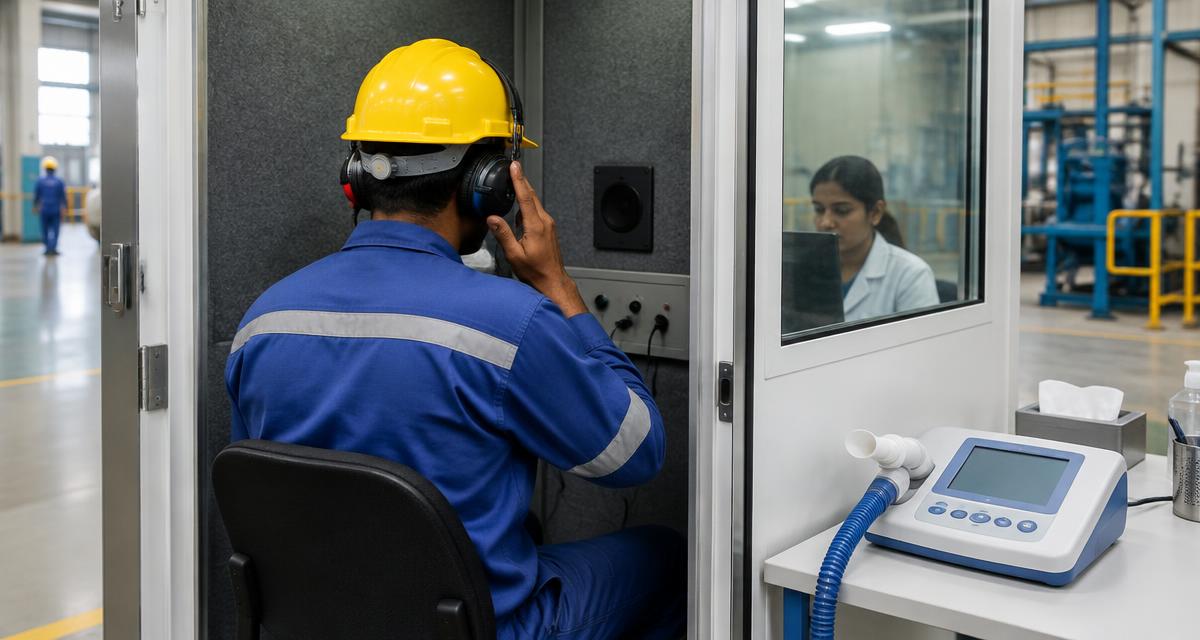
Factory medical checkup tests should follow the hazard, not a fixed package: audiometry for noise, spirometry and chest X-ray for dust and fumes, exposure-specific blood and urine tests for chemicals, and heat-stress screening for furnace and foundry work. Start from the exposure map of your plant, then build the test list for each job.
Our existing guides cover tests by industry for pre-employment and the Factories Act medical examination requirements. This guide takes a different angle: one hazard at a time, what to test, why, and what to do with the result.
Step 1: Map exposures before choosing tests
Walk the plant with the EHS team and list each section's exposures: noise levels, dusts, fumes, chemicals handled, heat sources, night shifts and driving roles. Workplace monitoring data — noise surveys, air sampling — tells you who is actually exposed. Tests chosen without this map either miss real risks or waste money on irrelevant ones.
Noise
- Test: pure-tone audiometry at joining and at intervals, with an ear examination.
- Why: noise-induced hearing loss is gradual and permanent; early shifts in the audiogram show up long before the worker notices.
- Act on results: a shift in hearing triggers a review of hearing protection fit, noise controls and job rotation. See our guide to hearing conservation programmes.
Dust and fumes
- Tests: spirometry (lung function) and chest X-ray where exposure is significant, plus a respiratory history.
- Why: silica, cement, metal and textile dusts and welding fumes damage the lungs slowly.
- Act on results: a falling lung function trend should prompt a check of ventilation, extraction and respiratory protection for that section.
Chemicals and solvents
- Tests: depend on the chemical — liver and kidney function, blood counts, and specific biological monitoring where the state rules prescribe it for that process — plus skin examination.
- Why: many solvents and process chemicals affect the liver, kidneys, blood or skin before symptoms appear.
- Act on results: abnormal results need a doctor's review, possible temporary redeployment and an exposure investigation.
Heat
- Tests: blood pressure, hydration status, cardiovascular review and a history of heat illness, ideally before the hot season.
- Why: furnace, foundry, kiln and poorly ventilated shed work cause heat exhaustion and heat stroke, especially in workers with heart disease, diabetes or obesity.
- Act on results: adjust rest cycles, hydration and job allocation for workers at higher risk.
Night shifts
- Tests: BP, blood sugar, BMI, lipids and sleep questions.
- Why: long-term night work raises cardiometabolic risk and fatigue-related incidents.
- Act on results: follow-up consultations, nutrition advice and shift-planning changes where possible.
Drivers, forklift and crane operators
- Tests: distance and near vision, colour vision, BP, sugar, and sleep-apnoea screening questions.
- Why: one undetected eye or sleep problem can cause a serious vehicle incident.
- Act on results: restrict operating duties until the issue is corrected.
Putting it together
| Hazard | Core tests | Typical action on abnormal result |
|---|---|---|
| Noise | Audiometry, ear examination | Review hearing protection and noise controls |
| Dust and fumes | Spirometry, chest X-ray | Review ventilation and respiratory protection |
| Chemicals | Exposure-specific blood/urine tests, LFT, KFT, skin check | Doctor review, redeployment, exposure investigation |
| Heat | BP, hydration, cardiovascular review | Adjust rest, hydration and job allocation |
| Night shift | BP, sugar, BMI, lipids, sleep questions | Follow-up and lifestyle support |
| Driving and lifting equipment | Vision, colour vision, BP, sugar, sleep screening | Restrict duties until corrected |
Frequency and records
How often each test is repeated depends on the process and your state rules. Use our Mandatory Health Checkup Finder to see the examinations and frequencies the rules list for your state and industry. Record results in the prescribed health register and keep fitness opinions separate from medical details.
Vibration and manual handling
- Tests: musculoskeletal examination, back and joint history, and hand examination for workers using vibrating tools.
- Why: loaders, packers and operators of grinders and breakers develop back, shoulder and hand problems that build over years.
- Act on results: review lifting aids, job rotation and tool maintenance; refer workers with symptoms early.
Working at height and confined spaces
- Tests: blood pressure, vision, balance, history of seizures or giddiness; respiratory and cardiovascular fitness for confined spaces.
- Why: a fainting episode or seizure at height or in a tank can be fatal.
- Act on results: restrict the task until the condition is controlled and reviewed.
Combining hazards in one examination
Many workers face more than one hazard — a welder in a hot, noisy shop, for example. Build their test list from every exposure they have, not just the main one, and schedule the tests in one visit so the worker loses as little time as possible.
Baselines matter
Every hazard-based test is most useful when compared with the same worker's baseline from pre-employment. Without a baseline, a single abnormal audiogram or lung function result is hard to interpret. That is why pre-employment examinations for exposed roles should include the same core tests as later periodic examinations.
Sharing results with workers
Workers should receive their own results with a plain-language explanation and, where something is abnormal, a clear next step. Workers who understand their results are more likely to use hearing protection, respirators and hydration breaks consistently.
Biological hazards and food handling
Workers in canteens, food plants and some pharma or waste-handling roles face biological hazards. Food handlers need the examinations food safety rules prescribe, and workers exposed to blood, sewage or biological waste may need vaccination such as Hepatitis B and periodic review by the doctor. Where workers handle biomedical waste in an OHC, segregation training belongs alongside the medical checkup.
Radiation and lasers
A small number of plants use radiography for weld inspection, X-ray equipment or industrial lasers. Workers in these roles need examinations and monitoring as the applicable regulator prescribes, including eye checks for some laser work. If you are unsure whether a process falls into this category, list it during exposure mapping so the doctor can confirm.
Linking test results to emergency readiness
Checkups sometimes reveal workers with uncontrolled blood pressure, diabetes or heart risk who work in roles where a sudden event would be dangerous — at height, near moving machinery or alone on night shifts. Beyond the fitness opinion, make sure every shift has first aid and CPR trained staff and a clear ambulance plan, so the factory is ready if something happens.
How Plan My Health helps
Plan My Health runs hazard-matched factory medical checkups onsite at plants across India, with audiometry, spirometry, vision and exposure-specific testing. See our complete guide to factory medical checkup in India and the pages on OHC for factories and pre-employment medical checkup.
FAQs
Which test is used for noise exposure?
Pure-tone audiometry at joining and at intervals, with an ear examination.
Which tests are used for dust exposure?
Spirometry (lung function) and chest X-ray where exposure is significant.
How are chemical exposure tests chosen?
By the specific chemical and the state rules for that process — often liver and kidney function, blood counts and specific biological monitoring.
Should heat-stress screening be done every year?
Ideally before each hot season for workers in hot jobs.
How often should factory tests be repeated?
It depends on the process and state rules; use the Mandatory Health Checkup Finder for your state and industry.
Share this article
Pick a tagline
The highlighted image above appears automatically as the preview picture on WhatsApp, LinkedIn and Facebook.
Related services
Want this for your workforce?
Start free with 25 employee health risk assessments and a corporate dashboard.
Get started for corporates