
Occupational health services: why a generic checkup is not enough
Understand how hazard-linked medical surveillance differs from general wellness screening, and what HR and EHS should ask when planning factory health services.
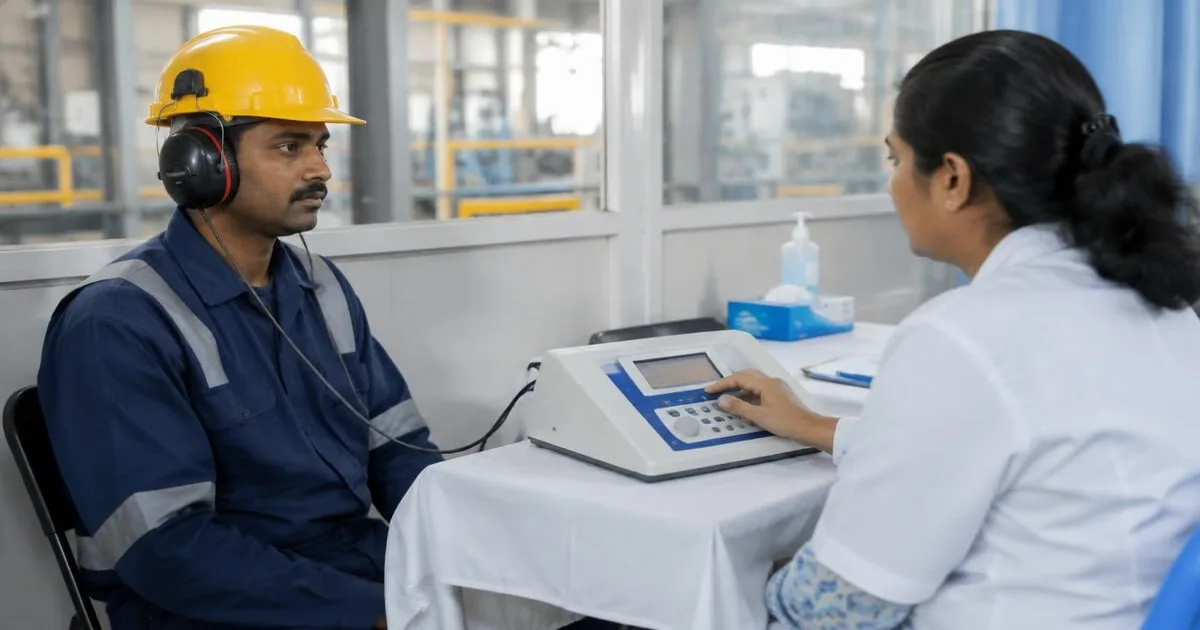
A normal general health report does not establish that a worker is protected from a job-related exposure. Occupational health services connect medical planning to workplace hazards, duties and preventive action. The starting point is the work itself, not a standard laboratory bundle.
Start with the exposure assessment
HR, EHS and the occupational health clinician should review processes, job tasks, shifts and relevant exposure information. Noise, dust, chemicals, heat and manual handling call for different approaches. Medical surveillance must accompany prevention and exposure control, not substitute for them.
Match examinations to the purpose
Depending on the risk and applicable requirements, a clinician may recommend pre-assignment, periodic, exposure-related or return-to-work review. Hearing or respiratory assessments may be appropriate for particular exposures; they are not a universal checklist for every employee.
- Document the job and hazard that each examination addresses.
- Confirm the examination schedule with a qualified occupational health professional.
- Define how findings trigger review of workplace controls and individual care.
Keep legal claims site-specific in India
Requirements depend on the establishment, activities, workforce and applicable central and state provisions. Verify current rules and notifications for your site. Do not assume one national headcount threshold, test panel or OHC staffing pattern applies everywhere.
Connect the OHC to real operations
A workplace clinic needs more than equipment. Clarify duty coverage, record handling, medicines management, referral arrangements and emergency coordination. Confirm ambulance scope and availability separately; a general service description is not a guaranteed response time.
Separate clinical information from employer decisions
Agree how the clinician communicates relevant fitness recommendations and restrictions while protecting personal clinical records. Occupational health surveillance should support prevention and safe work, not become an informal employee ranking system.
Explore occupational health centre services and use the OHC readiness checklist to prepare questions for your medical and EHS teams.
Editorial basis: WHO, Protecting workers’ health; ILO, Technical and ethical guidelines for workers’ health surveillance. Site-specific medical and legal review is required.
Share this article
Pick a tagline
The highlighted image above appears automatically as the preview picture on WhatsApp, LinkedIn and Facebook.
Related services
Want this for your workforce?
Start free with 25 employee health risk assessments and a corporate dashboard.
Get started for corporatesPlan this for your workplace
Discuss occupational health centre services for your employee roles, locations and shift coverage.