Diabetes and Hypertension Screening for Employees in India
Medically reviewed by: pending
Last updated 21 October 2026
Why employers in India should screen for diabetes and hypertension, which tests to include, and how to run it at the workplace.
By the Plan My Health corporate health team
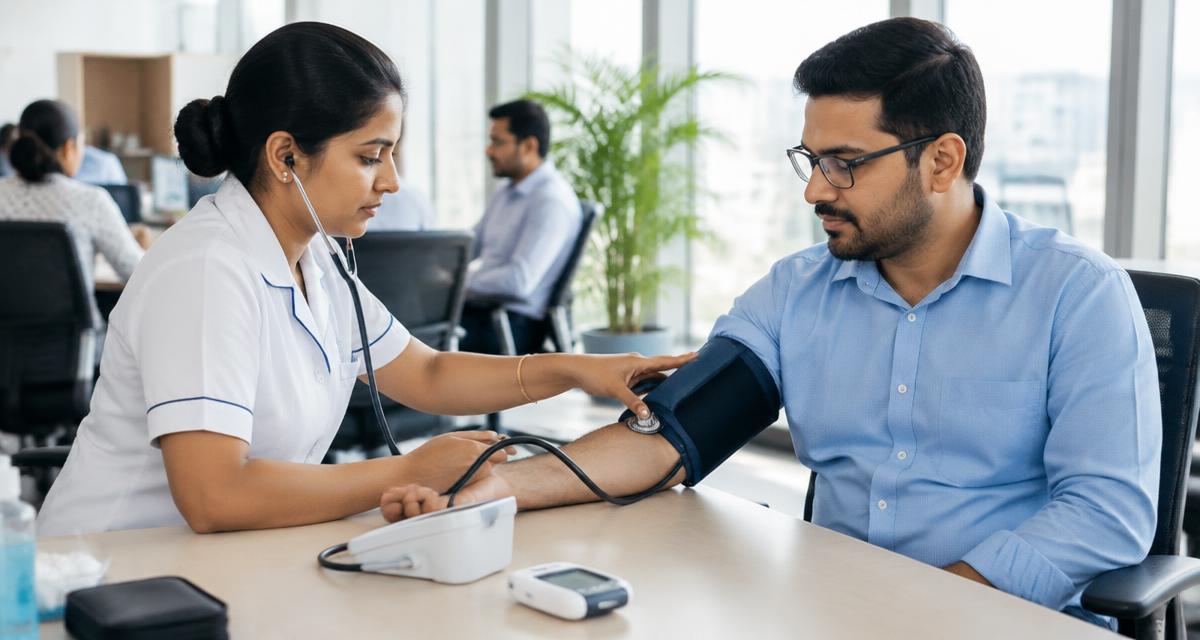
Diabetes and high blood pressure often cause no symptoms for years, so many people who have them do not know. Workplace screening finds them early, when lifestyle changes and simple treatment work best, and before they lead to heart attacks, strokes, kidney problems and long absences. For employers in India, a short, well-run screening drive is one of the most practical ways to protect a working-age population.
This guide explains which tests to include, how to run screening at work, how to handle results and privacy, and how screening fits into a wider programme. For the full checkup service, see our annual health checkup for employees page.
Why screen at the workplace
Non-communicable diseases (NCDs) such as diabetes and hypertension are a major public health priority in India, and the government runs population screening for them under its national NCD programme. Many employees still miss screening because they feel well and do not have time. Bringing it to the workplace removes both barriers: it takes a few minutes, happens during work hours and comes with a clear next step.
For the employer, early detection means fewer emergencies on site, fewer long medical absences and a healthier workforce over time. It also gives HR an anonymised picture of risk to plan wellness sessions around real needs rather than guesses.
Which tests to include
A practical workplace screening panel usually includes:
- Blood pressure: measured properly, seated and rested, with a repeat reading if the first is high
- Blood sugar: a fasting or random capillary test for quick screening, and HbA1c where a lab draw is possible, because it reflects average sugar over about three months
- Body measurements: weight, height, BMI and waist circumference, using Asian-Indian cut-offs, which are lower than Western ones — see why Indian BMI cut-offs matter
- Lipid profile: cholesterol and triglycerides, often added for employees above a certain age or with risk factors
- A short questionnaire: family history, smoking, physical activity, diet and sleep
The doctor leading the programme should decide the final panel based on age mix, existing health data and the job profile. Adding kidney function or other tests may make sense for some groups.
How to run it at work
- Agree the scope with HR and the medical team: who is eligible, which tests, which locations
- Communicate early: explain why, what tests, whether fasting is needed, and that results are private
- Set up a camp: a private area for BP and sample collection, a queue system by department or slot
- Use trained staff: nurses or phlebotomists for samples and BP, a doctor available for counselling
- Deliver results digitally to each employee, with a plain-language explanation
- Follow up: employees with abnormal results get a doctor consultation and a retest plan
Our guide to running an employee health checkup camp covers logistics in more detail.
Handling results and privacy
Individual results belong to the employee. HR should see only aggregate, anonymised data such as the share of employees in each risk band, never named results. Consent should be clear and voluntary. Results that need action should go to the employee and a doctor, not to the line manager. A screening finding is not a diagnosis: anyone with a high reading should have it confirmed by a doctor before any conclusions are drawn.
From screening to action
Screening only helps if it leads somewhere. Combine it with:
- Doctor consultations for people with high readings
- Diet and lifestyle sessions focused on sugar, salt and activity
- Health talks on diabetes and heart health — see our corporate wellness sessions
- A retest after a few months to see whether risks are improving
A health risk assessment before or alongside screening helps target tests to the people who need them most.
What it costs
Cost depends on the panel, headcount, number of locations and whether samples go to a lab. Any figure is indicative until the scope is agreed; we quote against your actual requirement rather than a fixed rate card.
How Plan My Health helps
We run onsite screening camps and partner-lab checkups across India, deliver digital reports to each employee, and give HR an anonymised dashboard. Explore our employee health checkup packages or send us an enquiry to plan a screening drive.
FAQs
Which tests should a workplace diabetes and hypertension screening include?
Blood pressure, a blood sugar test (capillary sugar or HbA1c), BMI and waist circumference using Asian-Indian cut-offs, and often a lipid profile, guided by the programme doctor.
Will HR see my individual results?
No. Individual results go to the employee and the doctor. HR receives only anonymised, aggregate data.
Is a high reading at a camp a diagnosis?
No. A screening result needs confirmation by a doctor, often with a repeat test, before any diagnosis is made.
How often should employees be screened?
Many employers screen once a year as part of the annual checkup, with earlier retests for people whose results need follow-up. The programme doctor should set the interval.
Share this article
Pick a tagline
The highlighted image above appears automatically as the preview picture on WhatsApp, LinkedIn and Facebook.
Related services
Want this for your workforce?
Start free with 25 employee health risk assessments and a corporate dashboard.
Get started for corporates