
First Aid Certificate Validity in India: When to Renew
Last updated 12 October 2026
Most workplace first aid and CPR certificates in India are treated as valid for one to two years, and many employers refresh CPR every year. Here is how to read the validity on a certificate, when to renew and how to track expiry across sites.
By the Plan My Health corporate health team
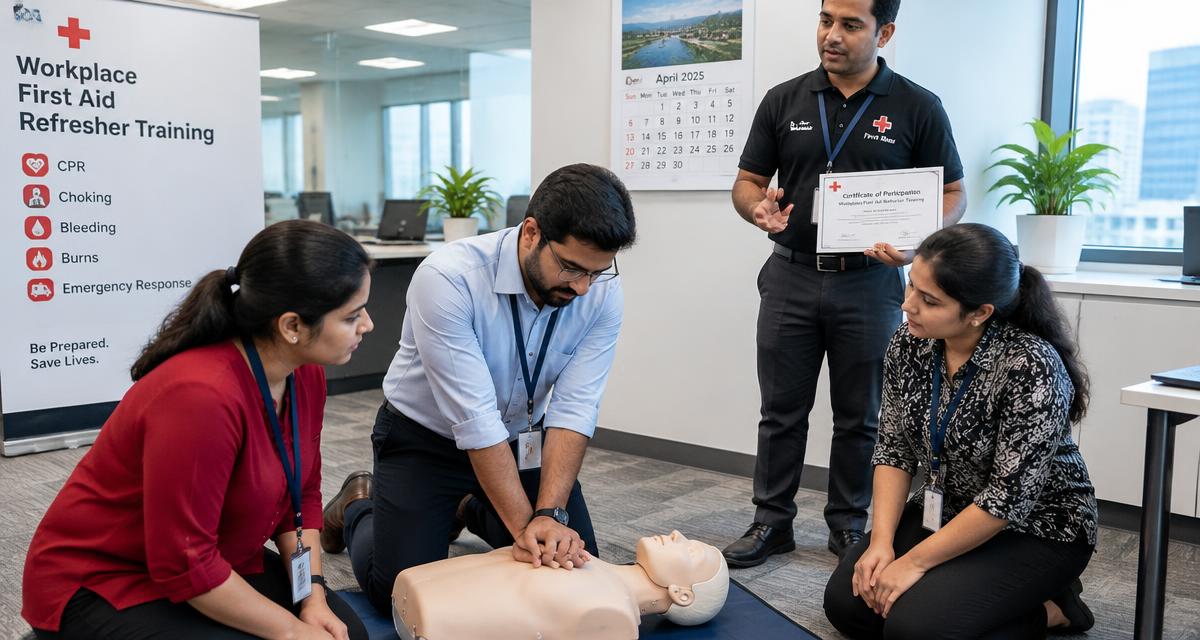
Most workplace first aid certificates in India carry a validity of one to two years, set by the training body rather than by a single national law. CPR and AED skills fade fastest, so many employers refresh them every 12 months even when the printed certificate runs longer.
This article focuses only on validity and renewal: what the expiry date means, why it differs between providers, what auditors check and how to stop certificates lapsing unnoticed. For choosing a course see our first aid certificate guide for employers; for formats and costs see certificate formats explained. For training itself, see first aid training across India.
Is there a legal validity period in India?
There is no single national rule that fixes how long a first aid certificate stays valid for every workplace. The Factories Act, 1948, state factory rules, BOCW rules for construction and the OSH Code 2020 require trained first aiders and first aid arrangements at many establishments, but the validity period usually comes from the course standard the trainer follows and from your own policy, client contracts or audit requirements. Some state rules, insurers or client EHS teams specify refresher frequency, so confirm what applies to each site.
Typical validity by course type
| Course | Validity commonly printed | Refresher practice |
|---|---|---|
| Basic workplace first aid | 1–2 years | Every 1–2 years, with annual drills |
| CPR and AED (adult) | 1–2 years | Many employers refresh every year |
| Advanced first aid for responders | 2 years | Refresher before expiry |
| Awareness sessions | Usually no validity | Attendance record only |
Treat these as common practice, not law. The certificate itself should state the issue date, modules covered and the expiry or recommended refresher date; if it does not, ask the provider before you rely on it in an audit.
Why skills expire before paper does
Hands-on skills such as chest compression depth, rescue breaths and using an AED decline within months when they are not practised. That is why resuscitation councils recommend frequent refreshers and why a two-year certificate with no practice in between is a weak safeguard. Short, regular practice on a manikin keeps responders confident, and our CPR and AED training is built around that.
What an expired certificate means
- In an audit: an expired certificate usually counts as no trained first aider for that shift or area.
- In a client or vendor audit: EHS teams often ask for a register with valid dates, not just copies of certificates.
- In an emergency: the person may still help, but confidence and technique are likely to have slipped.
- For insurance or incident reviews: lapsed training can weaken your position when an incident is investigated.
How to read a certificate
Check five things: the participant's full name, the training body and trainer, the modules covered (first aid, CPR, AED, choking), the issue date, and the expiry or refresher date. A certificate that shows only attendance without assessment, or that was issued after a video-only course with no manikin practice, may not satisfy an auditor even if the date is current.
Build a renewal calendar
- List every trained person with site, shift, course and expiry date.
- Flag anyone expiring in the next 90 days.
- Batch refreshers by site so one visit renews several people.
- Train replacements before a trained person leaves or transfers.
- Review the list monthly and after every resignation or shift change.
Our first aid responder roster guide shows how to tie expiry dates to floor and shift coverage, so a lapse shows up as a gap you can see.
Renewal course or full course?
A shorter refresher is usually fine when the certificate is still valid or only recently expired and the person has kept practising. If the certificate lapsed long ago, the person never practised, or guidelines have changed, a full course is the safer choice. Ask your provider which they recommend for each group.
Site types with tighter cycles
- Factories with machines, chemicals or electricity: refresh more often and add scenario drills. See first aid training for factories.
- Construction sites: high turnover of contract crews means certificates leave with workers; train each new crew. See first aid training for construction sites.
- Corporate offices: CPR/AED cover near every AED matters most. See first aid training for corporate offices.
How Plan My Health helps
We run hands-on first aid, CPR and AED training at workplaces across India, issue certificates showing modules and dates, and keep a digital register so HR can see who is due for renewal. Refreshers can be scheduled at shift change and in English, Hindi or regional languages.
This article is general guidance, not legal advice. Requirements vary by state, process and headcount, so confirm the rules that apply to each site.
FAQs
How long is a first aid certificate valid in India?
Usually one to two years, as set by the training body. There is no single national validity rule for all workplaces.
How often should CPR be refreshed?
Many employers refresh CPR and AED skills every year, because hands-on skills fade within months.
Does an expired certificate count in an audit?
Usually not. Auditors generally treat lapsed training as no trained first aider for that area or shift.
Can we do a short refresher instead of a full course?
Often yes, if the certificate is current or recently expired. Long-lapsed certificates usually need the full course.
Are online-only certificates acceptable?
They may not satisfy auditors, because CPR and first aid need hands-on practice and assessment.
How do we track expiry across many sites?
Keep a register with each person's site, shift and expiry date, flag renewals 90 days ahead and review it monthly.
Share this article
Pick a tagline
The highlighted image above appears automatically as the preview picture on WhatsApp, LinkedIn and Facebook.
Related services
Want this for your workforce?
Start free with 25 employee health risk assessments and a corporate dashboard.
Get started for corporates