
How to Start a Corporate Fitness Program in India: A 12-Week Plan
Last updated 11 October 2026
Start a corporate fitness program by measuring a baseline, choosing a few activities that suit your workforce, running a 12-week cycle with team challenges and re-measuring. This guide gives HR a step-by-step plan.
By the Plan My Health corporate health team
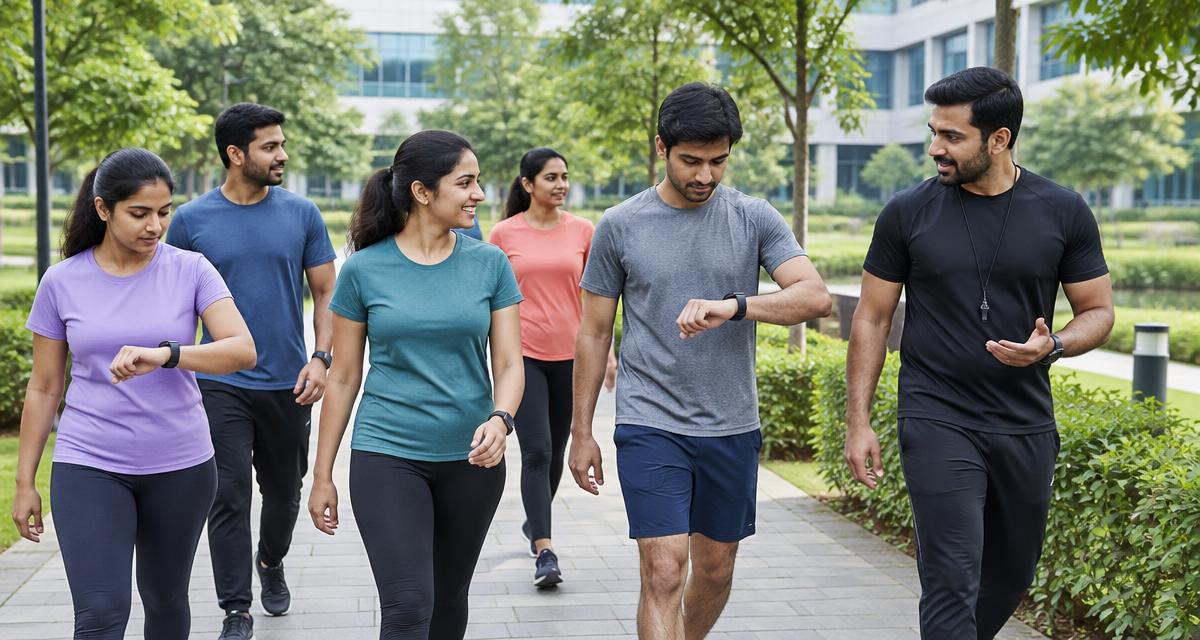
To start a corporate fitness program in India, measure a baseline first, choose three or four activities that fit how your employees actually work, run them as a 12-week cycle built around a team challenge, and re-measure at the end. You do not need a gym or expensive equipment; guided sessions, simple platform challenges and expert talks are enough to get most employees moving more. This guide sets out the plan step by step. It focuses on physical fitness; for the broader wellness programme, see our guide on how to start a corporate wellness program.
Step 1: Decide what 'fitness' means for your workforce
For an office team, fitness usually means sitting less, moving more and easing back and neck stiffness. For a factory or warehouse team that is already physically active, it means mobility, safe lifting, hydration and recovery. For a field sales team, it means keeping a routine while travelling. Write down which groups you have and what a realistic improvement looks like for each before choosing any activity.
Step 2: Measure a baseline
A baseline tells you where to focus and lets you show progress later. A five-minute employee health risk assessment captures activity minutes per week, sitting hours, sleep, stress and BMI on Indian cut-offs. Adding a checkup gives BP, sugar and other clinical values. HR sees only anonymised results; each employee gets a personal report and plan, which is itself a reason to join.
Step 3: Pick a few building blocks
Do not try to offer everything. Choose three or four of these, based on the baseline:
- Guided sessions: functional fitness and strength basics, dance movement, desk stretch and breathwork, led by certified trainers.
- Yoga: weekly online morning classes and desk-yoga breaks — see office yoga sessions.
- Team challenges: step, water, sleep or healthy-weight challenges on the employee platform.
- Nutrition: dietitian-led sessions on balanced Indian meals, weight and eating on shifts.
- Ergonomics: physiotherapist-led sessions on workstation set-up, posture and safe lifting.
Step 4: Design the challenge
A challenge gives the program a spine. Team step challenges are the most popular: employees form teams of five to ten, log steps daily or connect a fitness app, and a leaderboard shows team totals. To make it inclusive:
- Use team averages rather than totals so team size does not decide the winner.
- Reward improvement over each person's own first week, not just the highest numbers.
- Offer an alternative goal — such as yoga minutes or water intake — for employees who cannot walk long distances.
- Keep daily targets realistic and avoid rewarding extreme numbers.
- Let employees choose what appears on leaderboards.
Step 5: Build the 12-week calendar
- Weeks 1–2: launch message from a senior leader, baseline HRA, optional checkup camp, kick-off session.
- Weeks 3–6: team step challenge, weekly online yoga, one nutrition session.
- Weeks 7–8: ergonomics and back-care session, desk stretch breaks in team huddles, water challenge.
- Weeks 9–11: functional fitness session, sleep challenge, a stress management session.
- Week 12: celebration event, repeat HRA for participants, summary report.
Schedule sessions inside working hours wherever possible. Fitness that depends on staying late or coming early reaches only the people who are already fit.
Step 6: Adapt for factories and warehouses
On factory floors, fitness becomes a 10-minute warm-up and mobility routine at shift start, on paid time, in the workers' language. Add sessions on safe lifting and back care, hydration in hot months, nutrition on night shifts and tobacco cessation. Water and sleep challenges often suit shift workers better than steps. Include contract workers; they often do the most physical jobs.
Step 7: Adapt for hybrid and field teams
For hybrid and distributed teams, run sessions online at the start of the day, use app-based challenges and book baseline checkups at partner labs by PIN code. A short weekly video check-in with the trainer keeps people engaged across cities.
Step 8: Keep it safe
Ask employees to complete a short health questionnaire before joining active sessions and advise anyone with heart disease, uncontrolled blood pressure, diabetes on insulin, recent surgery, joint problems or pregnancy to check with their doctor first. Trainers should offer low-impact options and stop anyone who feels pain, chest discomfort or breathlessness. Do not run intense boot-camp style sessions for mixed groups.
Step 9: Communicate well
Launch with one short message: what the program is, how long it runs, how to join, and a privacy promise. Share weekly updates — team standings, a tip, the next session — and celebrate stories of improvement, with permission. Ask managers to join rather than just forward emails; teams follow what their manager does.
Step 10: Measure and report
At the end of the cycle, report participation by location and team, repeat participation, changes in activity and sitting-time answers between the baseline and repeat HRA, anonymised changes in BMI and BP distribution where a repeat checkup was run, and employee feedback. Leadership will want a one-page summary with what worked, what did not and the plan for the next cycle.
Budgeting
Costs depend on the number of guided sessions, whether they are onsite or online, the number of locations and whether checkups are included. Online sessions and platform challenges are the most economical way to reach many people; onsite sessions cost more but build stronger engagement. Ask for a written quote per session and per format so you can scale up what works.
Mistakes to avoid
- Buying a fitness app and expecting employees to use it without guided sessions or challenges.
- Designing only for the already-fit, with intense classes after hours.
- Running challenges that reward extreme step counts.
- Ignoring factory and field teams.
- Skipping the baseline, which leaves you with nothing to show at the end.
Getting leadership support
Before launch, agree with leadership what the program is for — more movement, better energy, a healthier baseline — and how it will be reported. A leader who joins the first session or the step challenge sends a stronger message than any email, and helps managers protect time in the working day for sessions.
After the first 12 weeks
Keep a lighter year-round rhythm: a weekly yoga class, a quarterly challenge, an ergonomics refresher and an International Yoga Day event on 21 June. Repeat the HRA every six to twelve months so you can see whether fitness habits are holding.
How Plan My Health helps
We build corporate fitness programs in India from an HRA baseline, guided yoga and fitness sessions, platform challenges, nutrition and ergonomics talks, with anonymised reporting for HR. The program fits inside our wider wellness sessions for employees and employee health benefits.
FAQs
Do we need a gym for a corporate fitness program?
No. Guided sessions, desk yoga, platform challenges and expert talks need no gym.
How long should the first program run?
Twelve weeks is a good first cycle, followed by a lighter year-round rhythm.
What is the best challenge to start with?
A team step challenge using team averages and rewarding improvement, with alternatives for those who cannot walk far.
How do we include factory workers?
Shift-start mobility routines on paid time, back care, hydration and nutrition sessions in their language.
How do we measure success?
Participation, repeat participation and anonymised changes between baseline and repeat assessments.
Share this article
Pick a tagline
The highlighted image above appears automatically as the preview picture on WhatsApp, LinkedIn and Facebook.
Related services
Want this for your workforce?
Start free with 25 employee health risk assessments and a corporate dashboard.
Get started for corporates