
AFIH Qualification Explained: When Your Factory Needs an AFIH Doctor
Last updated 9 October 2026
AFIH — Associate Fellow of Industrial Health — is the qualification factory rules expect for doctors examining workers in hazardous processes. Here is what it is, when it is required, and how to staff it.
By the Plan My Health corporate health team
Ask a factory inspector what qualification the doctor examining your hazardous-process workers should hold, and you will hear one answer: AFIH. Ask most HR teams what AFIH is, and you will get a blank look. This article explains the qualification, when your factory needs an AFIH-qualified doctor, and the practical ways to staff one — especially when AFIH doctors are scarce in your area.
What AFIH is
AFIH stands for Associate Fellow of Industrial Health — a recognised qualification in occupational health for medical practitioners. It is a structured programme covering occupational diseases, industrial hygiene, statutory medical examinations, toxicology and workplace health management, run by approved institutions in India.
The reason it matters legally: the Factories Act framework and state rules generally expect medical practitioners conducting statutory examinations of workers in hazardous processes — and certifying surgeons' functions — to hold a qualification in industrial health. AFIH is the most widely recognised route to that qualification for practising MBBS doctors.
When your factory needs an AFIH doctor
The triggers, in general terms:
- Hazardous processes: where your factory carries on a process listed in the Factories Act schedule of hazardous processes, the medical examinations of workers in those processes are generally expected to be conducted by, or under the supervision of, a doctor qualified in industrial health.
- Occupational health centres: where an OHC is required or operated, the medical officer in charge is expected to hold the industrial health qualification.
- Certifying surgeon functions: certain certifications — fitness certificates for young persons, examinations under specific rules — sit with certifying surgeons, whose appointment requires the relevant qualifications.
A plain MBBS doctor can run your first aid room, attend emergencies and conduct general health checkups. But the statutory examination of workers in scheduled hazardous processes is where the industrial health qualification becomes the expected standard. State rules vary in detail, so confirm the exact requirement for your state and process list.
What an AFIH doctor actually does in your factory
Beyond signing registers, a competent occupational health doctor:
- Designs the medical surveillance plan — which tests, for which workers, at what frequency — based on your process list and exposures.
- Conducts and certifies pre-employment and periodic medical examinations, issuing fitness certificates in the prescribed format.
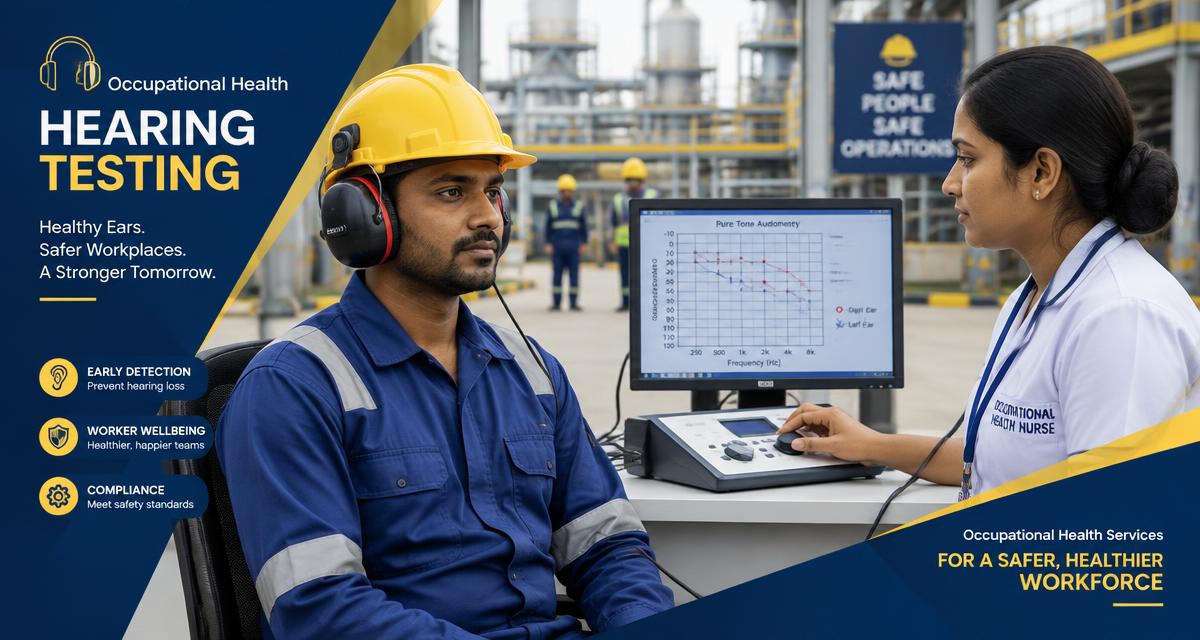
- Reviews investigation results in exposure context — an audiogram from a press shop worker is read differently from one in an office.
- Advises on workplace hygiene findings — ventilation, PPE compliance, noise mapping — because occupational health is about preventing disease, not just detecting it.
- Trains your first aiders, supervises the OHC nursing team and stands behind your records at inspection.
The staffing problem — and three ways to solve it
AFIH-qualified doctors are concentrated in industrial cities, and many factory belts have few of them. Employers typically solve this one of three ways:
- Full-time factory medical officer: justified at large plants with continuous hazardous processes. Expensive, but the doctor learns your plant deeply.
- Visiting medical officer model: an AFIH doctor visits on scheduled days for statutory examinations and certifications, while onsite nurses run the daily OHC. This is the most common model for mid-sized factories — and the one our OHC doctor and nurse staffing service is built around.
- Digital OHC with scheduled in-person visits: daily operations run by onsite nurses with tele-access to doctors, while the AFIH-qualified doctor conducts the statutory examination days physically at your plant. Our occupational health centre services combine both.
What to check before you engage a doctor
- The AFIH certificate itself — institution and year.
- Experience with your industry type: chemical surveillance is different from engineering.
- Familiarity with your state's factory rules and the prescribed register formats.
- Availability commitment in writing — visits per week or month, response time for emergencies, and leave cover.
Frequently asked questions
Is AFIH legally mandatory for every factory doctor?
No. The qualification expectation attaches to statutory examinations of workers in hazardous processes and to OHC medical officer roles, not to every medical function in every factory. A general MBBS doctor can handle first aid supervision and general checkups.
Can a doctor with a diploma in industrial health substitute for AFIH?
Other recognised qualifications in industrial or occupational health may be accepted depending on the rule and the state. Confirm the acceptable qualifications for your specific obligation before appointing.
How often must the AFIH doctor visit?
Often enough to conduct the statutory examinations at the prescribed frequency and to supervise the OHC meaningfully. In practice, monthly or fortnightly scheduled visits are common for mid-sized factories.
What happens if our statutory examinations were done by a non-qualified doctor?
Inspectors can treat the examinations as not properly conducted, which means the underlying compliance — examined workers, valid fitness certificates — is in doubt. If you are unsure about past examinations, get the surveillance plan reviewed and re-baseline the examinations.
Do you provide AFIH doctors on a visiting basis?
Yes — that is our standard model for factories that do not need a full-time medical officer. Request a proposal with your location, headcount and process list.
Plan My Health staffs AFIH-qualified doctors, GNM/ANM/BSc nurses and paramedics for occupational health centres across India. See how the model works on our OHC staffing page.
Share this article
Pick a tagline
The highlighted image above appears automatically as the preview picture on WhatsApp, LinkedIn and Facebook.
Related services
Want this for your workforce?
Start free with 25 employee health risk assessments and a corporate dashboard.
Get started for corporates